The grape harvest will get started in the southern part of the state in the next couple of weeks. Most varieties are slightly behind normal this year. In Lafayette, early varieties are at the start of veraison and should be ready to harvest in four to five weeks. We generally harvest early varieties such as…Read more about Grape Harvest Preparation[Read More]
Disease Management
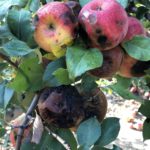
After second cover, the most serious apple pathogens are generally less active, as terminal buds have set, leaves have hardened off (and are now less susceptible) and weather is usually getting hotter and drier. Just not this year!!! This is the time when we often dial it back a notch in the fungicide department. One…Read more about Fungicide Use Midseason and On[Read More]
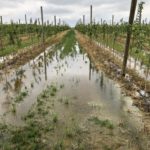
Current wet weather is increasing the risk of Phytophthora diseases in the orchard. Phytophthora is a major problem on apples and pear; stone fruit are also susceptible, with plums being the most resistant to this disease. In addition to excessive soil moisture and flooding, moderate temperatures, wounds (mechanical or through herbicide damage), and rootstock susceptibility…Read more about Phytophthora[Read More]
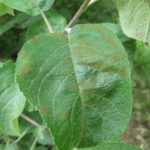
Apple Disease Management Constant rain has resulted in a great scab season. Again. Keep in mind that infection develops really slowly under these (mostly) cool, wet conditions. This means symptoms from primary infection may have just started to be visible and that we are already going into secondary infection even as primary infection continues. With…Read more about Disease Management[Read More]
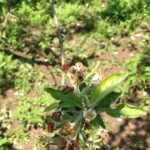
Apple Disease Management Notes for April For those at tight cluster through pink: Assuming trees have less than 3” of new growth, early applications of apogee will help prevent fire blight in what is shaping up to be a cooler, wet spring. With temperatures flirting with 70, fire blight needs to be on your radar…Read more about Apple Disease Management Notes for April[Read More]
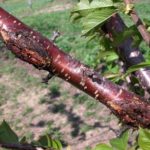
Sweet cherry is crop that continues to be of great interest to Indiana growers. It also continues to be a challenge due to bacterial canker, caused by Pseudomonas syringae. This bacterium is a significant pathogen of young sweet cherry trees killing 10 to 20 percent of the trees in new orchards within 5 years of…Read more about Ten step program to manage bacterial canker of sweet cherry[Read More]

Just like other commodities, “generic” versions are increasingly available for many common fungicides as patents expire on various proprietary active ingredients. By law, generic products must contain the same amount of active ingredient as the original fungicides, but the formulation may be different. As a result, confusion continues as formulation of a fungicide is proprietary…Read more about Generic Names: The Errors are Legion[Read More]
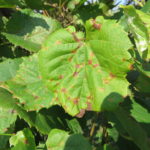
We are seeing a lot of powdery and downy mildew on grapes this year. These diseases often get established in the late season after harvest. It is important to maintain healthy foliage all the way until frost to maximize winter hardiness. So managing these diseases is important in years like this. Growers should consider a…Read more about Late Season Disease Management in Grapes[Read More]
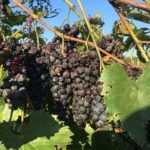
2018 is looking a bit like 2016 with all this late summer rain. We’ve had statewide rainfall each of the past 5 weeks. Most unwelcome! Sour rot and Ripe rot are becoming common in our research trials and vineyards around the state. Early ripening thin-skinned varieties are especially prone to skin splitting and cracking due…Read more about Grape Harvest and Rain[Read More]
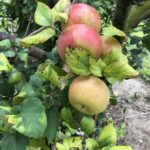
Susan Brown of Cornell probably said it best: “The performance and attributes of Honeycrisp are varied and can be grouped under the heading, ‘The good, the bad, and the ugly.’ The ‘good’ refers to a great name for marketing and excellent texture, crispness, and juiciness. The ‘bad’ refers to coloring problems, appearance defects, and susceptibility…Read more about Yellows and Bitter Pit[Read More]