June 6-7, 2018 Indy International Wine Competition Hosted by the Purdue Wine Grape Team Purdue Memorial Union Ballroom http://www.indyinternational.org/. June 26, 2018 Summer Field Tour- Fruits & Vegetables Garwood Orchard, LaPorte, IN Contact Lori Jolly-Brown ljollybr@ purdue.edu October 17, 2018 Indiana Flower Growers Conference Daniel Turf Center Contact Lori Jolly-Brown ljollybr@ purdue.edu January 8, 2019 Illiana…Read more about Upcoming Events[Read More]
Found 896 Articles
For chemical thinning of apples, the best time for post-bloom thinning is around 10-12 mm fruit diameter. With warm temperatures fruit can grow up to 1mm per day, so in northern areas we are right in the middle of chemical thinning time. Often at thinning time we talk about temperatures needing to be warm enough…Read more about Chemical Thinning[Read More]
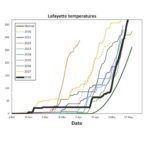
This is the last installment of our series on spring temperatures for 2018. What a strange year it has been. We started out very cool until mid-April and it didn’t really warm up until early May (Fig. 1). I think every day since then has been over 80F. Although the early spring was much cooler…Read more about Spring Temperatures[Read More]
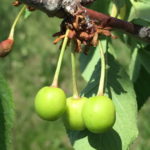
Eastern flower thrips, an occasional pest of strawberries, have been reported in large numbers in central Indiana. They are attracted to and feed on flowers, with the result being leathery fruit or fruit that fail to ripen. This problem occurs every year at some level but has not been serious since 1994. Eastern flower thrips…Read more about Eastern Flower Thrips[Read More]
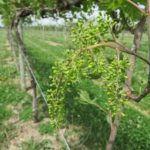
We’ve had some weird weather this year. April was cool and crop growth was delayed. But once May arrived, warm conditions lead to rapid development of fruit crops. We are now about “normal” in development. That means that grapes in the southern half of the state are nearing the pre-bloom stage, which is a key…Read more about Important Pre-bloom Sprays for Grapes[Read More]
Eastern flower thrips, an occasional pest of strawberries, have been reported in large numbers in central Indiana. They are attracted to and feed on flowers, with the result being leathery fruit or fruit that fail to ripen. This problem occurs every year at some level but has not been serious since 1994. Eastern flower thrips…Read more about Eastern Flower Thrips[Read More]
We are delighted to be hosted for our Summer Tour by Garwood Orchards – one of the larger and best run operations in the state. This applies to their fruit, vegetable and farm marketing activities. Whether you are a fruit grower, a vegetable grower or a farm marketer, you are bound to be inspired and…Read more about Summer Field Tour[Read More]
We’re getting close to the time when growers need to make chemical thinning decisions – for many the most perplexing and risky decision they will make all year. Even with a relatively mild spring without too much interference by spring frosts, this is a tricky call to make. In most cases, there are plenty of…Read more about Apple Chemical Thinning[Read More]

We all know that it in the last two weeks, temperatures have warmed up considerably, but when we plot out the growing degree days (GDD), we can see how dramatic this warming trend has been (Figure 1). In Lafayette a couple of weeks ago, we had accumulated less than 100 GDD – now we’re closing…Read more about Spring Temperatures[Read More]
Purdue University prohibits discrimination against any member of the University community on the basis of race, religion, color, sex, age, national origin or ancestry, genetic information, marital status, parental status, sexual orientation, gender identity and expression, disability, or status as a veteran. This material may be available in alternative formats. 1-888-EXT-INFO Disclaimer: Reference to products in this publication is not intended to be an endorsement to the exclusion of others which may have similar uses. Any person using products listed in this publication assumes full responsibility for their use in accordance with current directions of the manufacturer.