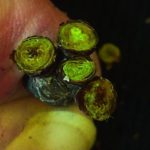
This winter was significantly colder than normal in the northern half of Indiana. Many areas north of “I-70” experienced temperatures between -15 and -20˚F in early January. That is cold enough to cause considerable cold injury to grapes, peaches, and blackberries. Ten below zero is a commonly accepted threshold for seeing damage to cold sensitive…Read more about Cold Injury to Fruit Crops[Read More]
Found 896 Articles
One way insects communicate with individuals of the same species is with pheromones. Pheromones are volatile chemicals released by an insect that usually can be detected only by individuals of the same species. There are a number of different types of pheromones, but the most common type is the sex pheromone. Usually the females will…Read more about Pheromones and Pheromone Traps[Read More]
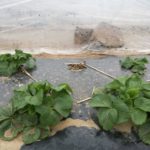
Although strawberry plants can be quite cold hardy, they need protection to survive the winter. In North Carolina, growers use floating row covers to protect strawberries in the winter. In Indiana, straw mulch is a more traditional way of winter protection for strawberries grown in a matted row system. After two relatively mild winters in…Read more about Strawberry Winter Protection: Straw Mulch vs. Row Covers[Read More]
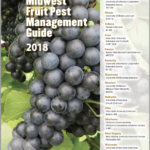
The Midwest Fruit Pest Management Guide is updated each year by the Midwest Fruit Workers group to provide the most complete information and recommendations for controlling weeds, diseases and insect pests of all major fruit crops grown in the Midwest. For the past three years, the guide has combined information on tree fruit, small fruit…Read more about Midwest Fruit Pest Management Guide (ID-465) available[Read More]
If you sold, or normally do you sell, more than $1000 worth of agricultural products in a year then it is your responsibility to fill out the 2017 USDA Census of Agriculture. USDA’s National Agricultural Statistics Service (NASS) needs a Census of Agriculture response from ALL the nation’s producers. In order to get an accurate…Read more about Census of Agriculture[Read More]
The proper time to remove straw from matted row strawberries is when the bare-soil temperature at 4 inches averages about 40-43˚F. This usually coincides with mid to late March in central Indiana. This year is later than average with soil temperatures still in the 40s. Plants will begin pushing new leaves as the soil temperatures…Read more about Straw Removal on Strawberries[Read More]
Anthracnose, caused by Elsinoe veneta, is a common fungal disease on black raspberries and some blackberries. It is much less common on red raspberries. Most modern thornless blackberries (Apache, Triple Crown, Osage, Ouachita, etc) are resistant to anthracnose. Most black raspberry cultivars are highly susceptible. If you grow a susceptible variety, is is important to…Read more about Anthracnose on Blackberries and Black Raspberries[Read More]
It’s been a cool spring this year and brambles are still mostly dormant in the Lafayette area. This is a good time to finish pruning chores. In summer fruiting types, this past year’s fruited canes should be removed if they were not removed last summer or fall. Remove weak or spindly floricanes and thin to…Read more about Pruning Brambles[Read More]

Check list: ~Indiana Disease management program for apples for 2018 is available at: https://www.extension.purdue.edu/extmedia/BP/BP-201-W.pdf This information is identical to the Midwest fruit pest management guide, but provided in a table format and includes Fungicide Resistance Action Committee (FRAC) Codes, REI, PHI and efficacy information for each product (Fig. 1). ~Reducing overwintering inoculum for apple scab:…Read more about Forewarned is Forearmed[Read More]
Spring freeze damage can be a significant economic problem for Midwest grape growers. Widespread damage occurred in 2007, 2012 and 2017 when warm temperatures in February and March were followed by freezing temperatures. Obviously this year has been very cool so far so there is hopefully less risk of early budbreak and frost damage. But,…Read more about Pruning to Adjust for Winter Injury and Avoid Spring Frost Damage to Grapes[Read More]
Purdue University prohibits discrimination against any member of the University community on the basis of race, religion, color, sex, age, national origin or ancestry, genetic information, marital status, parental status, sexual orientation, gender identity and expression, disability, or status as a veteran. This material may be available in alternative formats. 1-888-EXT-INFO Disclaimer: Reference to products in this publication is not intended to be an endorsement to the exclusion of others which may have similar uses. Any person using products listed in this publication assumes full responsibility for their use in accordance with current directions of the manufacturer.