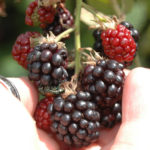
Grapes are starting to ripen (veraison) in Lafayette. Marquette and Brianna are the earliest varieties and both are about 2 weeks from harvest. Floricane producing blackberry harvest continues. Primocane fruiting blackberries and raspberries are just getting started. Japanese beetles continue to be a major problem in addition to Spotted Wing Drosophila. Peach harvest is winding…Read more about Crop Conditions[Read More]
Found 896 Articles
Grape harvest is just about to get started in the southern part of the state. Early varieties will be harvested starting next week. Most varieties are slightly ahead of normal this year. In Lafayette, Marquette and Brianna are at full veraison and shold be ready to harvest in the next couple of weeks. We generally…Read more about 2017 Grape Harvest[Read More]
From my own observations and reports from growers, it appears that Japanese beetle populations are higher than they have been for a number of years. I’ve seen severe damage to small fruits, as well as the Pristine apple tree in my backyard. In addition, after insecticides are applied to knock them down, populations reappear after…Read more about Japanese Beetles[Read More]

Although PristineTM was selected in 1982, its history goes back to the early days of the PRI breeding program. From an original cross of Rome Beauty with Malus floribunda 821, selections and hybridizations were made incorporating Golden Delicious, McIntosh, Starking Delicious and Cazumat along the way. The cross that resulted in PristineTM was Coop 10…Read more about PristineTM Apple[Read More]
Southwest Purdue Agricultural Center High/Low Tunnel Tour co-sponsored with Dept. of Recreation, Park, and Tourism Studies at Indiana University August 10, 2017 Vincennes, IN Contact Wenjing Guan, guan40@purdue.edu, or Dan Egel at egel@purdue.edu Registration: Call 812-886-0198 Pinney Purdue Vegetable and High Tunnel Field Day – co-sponsored with Dept. of Recreation, Park, and Tourism Studies at…Read more about Upcoming Events[Read More]
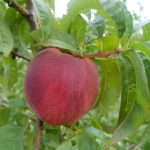
Weather the past couple of weeks has been a bit unsettled. Many parts of the state have experienced rounds of heavy rainfall from storm fronts. More are predicted. Peach harvest is underway in Lafayette and quality is very good. Early apples such as Pristine are also ready for harvest. Summer fruit blackberry harvest continues. Spotted…Read more about Crop Conditions[Read More]
Plant nutritional status is important for all phases of plant growth and has a direct effect on vigor, fruitfulness, cold hardiness, and other factors. Tissue analysis is the most reliable means of determining plant nutritional status. Combined with soil testing, tissue analysis can help pinpoint the source of problems and determine what measures may be…Read more about Tissue Analysis for Grapes and Berry Crops[Read More]
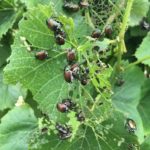
Rick Foster noted in the previous issue that Japanese beetles were out. Wow are they ever! I haven’t seen them this bad in years. Small fruit growers should monitor their crops and control the beetles if necessary. Japanese beetles will feed on ripening fruit of brambles and blueberries, and on foliage of all small fruit…Read more about Japanese Beetles on Grapes and Berries[Read More]
Shirley Reisner Janick It is with great sadness we report the passing of Shirley Janick. Shirley was the wife of Dr Jules Janick for almost 65 years. Shirley was born on August 11, 1932, in New York City, the eldest of three daughters and lived in Israel in her early years. She attended the New…Read more about In Memoriam[Read More]
Although PristineTM was selected in 1982, its history goes back to the early days of the PRI breeding program. From an original cross of Rome Beauty with Malus floribunda 821, selections and hybridizations were made incorporating Golden Delicious, McIntosh, Starking Delicious and Cazumat along the way. The cross that resulted in PristineTM was Coop 10…Read more about Pristine™ apple[Read More]
Purdue University prohibits discrimination against any member of the University community on the basis of race, religion, color, sex, age, national origin or ancestry, genetic information, marital status, parental status, sexual orientation, gender identity and expression, disability, or status as a veteran. This material may be available in alternative formats. 1-888-EXT-INFO Disclaimer: Reference to products in this publication is not intended to be an endorsement to the exclusion of others which may have similar uses. Any person using products listed in this publication assumes full responsibility for their use in accordance with current directions of the manufacturer.