Found 896 Articles
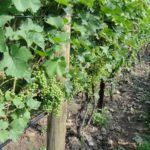
Canopy management is a critical production practice for improved sunlight exposure. Pulling shoots off the top of the rows improves sunlight exposure to the leaves at the base of the shoots. Those nodes will be the ones saved as spurs next year during pruning and sunlight improves bud fruitfulness and cane hardiness. Shoot positioning is…Read more about Canopy Management and Leaf Removal in Grapes[Read More]
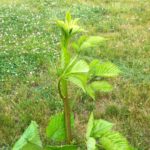
One of the most important management practices for production of blackberries and black raspberries is summer tipping of the primocanes. This practice removes the apical dominance of the shoot tip, resulting in several lateral branches below the tip, and a stronger primocane. Next year’s crop will primarily be produced from buds on the lateral branches,…Read more about Tipping blackberry and black raspberry primocanes[Read More]
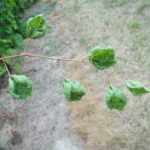
The Office of the Indiana State Chemist has filed a Notice of Intent to Adopt a New Rule that will make most dicamba containing herbicides Restricted Use Products (RUP). This designation will allow the OISC to track sales of those herbicides. As many specialty crop growers know, dicamba is one of the growth regulator herbicides…Read more about Dicamba Public Comment Period and Hearing[Read More]

The level of fruit drop is almost complete across the state and in some cases we likely have some hand thinning ahead of us. Fruit is generally 20 mm or above which means it’s too late for most chemical thinners. If spurs in your trees look like those in the apple photo in Crop Conditions,…Read more about Apple Fruit Drop[Read More]

We are pleased to announce that the fruit and vegetable growers will be joining together for a summer field tour being hosted by Tuttle Orchards in Greenfield, IN on Wednesday, June 28. Topics to be covered include fruit production, vegetable production, farm marketing, and agritourism. There’s something here of interest to everyone so I hope…Read more about Indiana Fruit and Vegetable Field Tour[Read More]

Grapes in the southern half of the state will soon be reaching the critical pre-bloom stage, which is a key time to control important diseases such as black rot, downy mildew, and powdery mildew. The three or four sprays made from immediate pre-bloom to 4 weeks post bloom are critical for controlling fruit infections. Growers…Read more about Important Pre-bloom Sprays for Grapes[Read More]
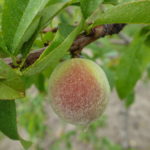

Diagnosing Phytophthora crown rot is difficult. First examine the crown and rule out any type of mechanical damage, including rodent damage. Early symptoms of root and crown rot include delayed bud break, small leaves (often with leaf discoloration), and twig dieback. Bark discoloration, unthrifty growth, and premature leaf drop may occur later in the season…Read more about Phytophthora Symptoms[Read More]
Indiana Horticultural Society Field Day June 28, 2017 Tuttle Orchard Greenfield, IN More details to come but mark the date on your calendar and plan to attend Indiana Winery and Vineyard Association Summer Meeting and Vineyard Tour July 18-19, 2017 Brown County Inn, Nashville IN More details to come, but mark the date on your calendar…Read more about Upcoming Events[Read More]
Purdue University prohibits discrimination against any member of the University community on the basis of race, religion, color, sex, age, national origin or ancestry, genetic information, marital status, parental status, sexual orientation, gender identity and expression, disability, or status as a veteran. This material may be available in alternative formats. 1-888-EXT-INFO Disclaimer: Reference to products in this publication is not intended to be an endorsement to the exclusion of others which may have similar uses. Any person using products listed in this publication assumes full responsibility for their use in accordance with current directions of the manufacturer.