
Huber’s Orchard and Winery celebrated their 175th anniversary recently in Starlight. The Huber homestead, founded in 1843 by Simon Huber, has diversified into a multi-generational business now being led by 6th & 7th generation family members. A Welcome Ceremony and Press Conference kicked off the day’s festivities. Guests included Matt Hall, Executive Vice President of One…Read more about Congratulations to Huber’s Orchard and Winery on 175 Years![Read More]
Found 896 Articles
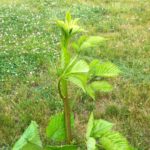
One of the most important management practices for production of blackberries and black raspberries is summer tipping of the primocanes. This practice removes the apical dominance of the shoot tip, resulting in several lateral branches below the tip, and a stronger primocane. Next year’s crop will primarily be produced from buds on the lateral branches,…Read more about Summer Cane Tipping in Brambles[Read More]
Canopy management is a critical production practice for improved sunlight exposure. Pulling shoots off the top of the rows in high cordon-trained vines improves sunlight exposure to the leaves at the base of the shoots. Those basal nodes will be the ones saved as spurs next year during pruning, and sunlight improves bud fruitfulness and…Read more about Canopy Management in Grapes[Read More]
Those of you lucky enough to still have a crop. Drier than usual weather means the risk of scab and bacterial diseases is low, but powdery mildew is higher. Although Rally and Topguard provide excellent control of powdery mildew, Flint extra, Luna Sensation and Merivon all provide excellent control of not only powdery mildew, but…Read more about Peaches[Read More]
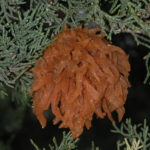
From one of the coldest Aprils to one of the hottest Mays, what will June bring us? So far, apple scab has been less of a problem than usual, but powdery mildew seems to flying under the radar for many orchards. Keep your eyes out for the characteristic leaf curl (Fig.1). Varieties like Jonathan, JonaGold,…Read more about Apples[Read More]
June 13, 2018 Southwest Purdue Ag Center High Tunnel Tour Southwest Purdue Agricultural Center 4369 North Purdue Road, Vincennes, IN 47591 Contact Wenjing Guan guan40@purdue.edu June 26, 2018 Summer Field Tour- Fruits & Vegetables Garwood Orchard, LaPorte, IN Contact Lori Jolly-Brown ljollybr@ purdue.edu July 17-18 Indiana Winery and Vineyard Association Summer Meeting Brown County Inn, Nashville, IN…Read more about Upcoming Events[Read More]
Seal the Seasons is a growing food company founded on supporting local growers by making local food available all year-round. Seal the Seasons partners with local family farms on a state-by-state basis to source local food (focused primarily on fruit and vegetables), freeze it, and sell to grocers, with the grower proudly featured on the…Read more about Supporting Local Indiana Agriculture[Read More]
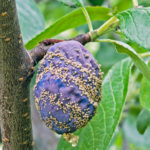
What??? Yes, thanks to the Return Bloom Fund and the Meigs Farm Team, we have a small planting of three varieties of plum: Early Shiro, Green Gage, and Ruby Queen. Did you know in Australia, some varieties are retailing at $15.90AU per kilogram (or $7.22 per pound)? Most Midwesterners only know those hard, tasteless things…Read more about Plums[Read More]
Following the success of last year’s Summer Field Tour at Tuttle Orchards, this year we are again planning a combined summer field tour with the Indiana Horticultural Society, the Indiana Vegetable Growers’ Association and the Indiana Farm Market Association. We will be hosted by Garwood Orchards in La Porte, IN. While we encourage membership in…Read more about Summer Field Tour – fruits and vegetables[Read More]
Purdue University prohibits discrimination against any member of the University community on the basis of race, religion, color, sex, age, national origin or ancestry, genetic information, marital status, parental status, sexual orientation, gender identity and expression, disability, or status as a veteran. This material may be available in alternative formats. 1-888-EXT-INFO Disclaimer: Reference to products in this publication is not intended to be an endorsement to the exclusion of others which may have similar uses. Any person using products listed in this publication assumes full responsibility for their use in accordance with current directions of the manufacturer.