
June bearing strawberries are “short day” plants that set flower buds in response to short days. As we get into late summer, days shorten and strawberry plants respond by setting the flower buds that will result in the crop next spring. It is important to maintain appropriate nutrition and soil water status during this time….Read more about Strawberry fruit bud development[Read More]
Found 896 Articles
Grape harvest is just getting started in the southern part of the state. Early varieties have been harvested for the past week. Most varieties are slightly ahead of normal this year. Fruit quality overall is very good. Many vineyards are still recovering from the winter of 2014 so yields will still be below normal. With…Read more about Grape harvest 2016[Read More]
Plant nutritional status is important for all phases of plant growth and has a direct effect on vigor, fruitfulness, cold hardiness, and other factors. Tissue analysis is the most reliable means of determining plant nutritional status. Combined with soil testing, tissue analysis can help pinpoint the source of problems and determine what measures may be…Read more about Tissue analysis for grapes and small fruit[Read More]
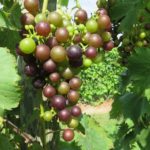
Grape harvest has began in the southern part of the state and will begin in central areas over the next week or so. Early varieties are nearing full maturity while late varieties are just at, or not yet at veraison. Overall fruit quality looks excellent. Apple harvest continues. Summer varieties are mostly done and early…Read more about Crop conditions, current growth stages[Read More]

The symptoms of flyspeck and sooty blotch have begun to make their appearance. I know this because 1). I’m starting to see spots, and 2). We have accumulated MORE THAN enough hours of post- petal fall leaf wetness needed for infection to occur. First, what is enough hours of post- petal fall leaf wetness needed…Read more about Symptoms of flyspeck and sooty blotch[Read More]
Harvest of early season apples has begun in many places around the state. Many of these early apples can suffer from extreme pre-harvest drop. Pristine is certainly in this category, so be careful not to allow fruit to become too ripe on the tree. This risks a large proportion of the crop falling on the…Read more about Early season apples[Read More]
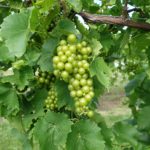
Populations of spotted wing drosophila continue to increase. As best I can tell, numbers are not at the devastating levels that they were a couple of years ago, but there are still plenty around to cause very serious injury to small fruit. Raspberry, blackberry, and blueberry growers should be on a regular spray program at…Read more about Spotted Wing Drosophila[Read More]
This pest has been extremely common in many locations this year. They can cause defoliation of a number of fruit crops and can be especially devastating to young trees, so they need to be controlled to prevent losses. They also like to feed on most of the small fruits, early maturing varieties of apples, and…Read more about Japanese Beetles[Read More]
Mites continue to be a concern for both fruit and vegetable growers. We are just now at the historical peak population time for European red mites. Fruit growers should be scouting their more susceptible blocks regularly for the next few weeks. The thresholds for treatment increase as we get later in the season. See https://extension.entm.purdue.edu/publications/E-258/E-258.html…Read more about European Red Mites[Read More]
Purdue University prohibits discrimination against any member of the University community on the basis of race, religion, color, sex, age, national origin or ancestry, genetic information, marital status, parental status, sexual orientation, gender identity and expression, disability, or status as a veteran. This material may be available in alternative formats. 1-888-EXT-INFO Disclaimer: Reference to products in this publication is not intended to be an endorsement to the exclusion of others which may have similar uses. Any person using products listed in this publication assumes full responsibility for their use in accordance with current directions of the manufacturer.