Japanese beetles have emerged and are actively feeding on our fruit crops. This pest, which used to be the primary insect pest of most small fruits, is no longer the serious pest it used to be, but can still cause problems in localized areas. Small fruit growers who are spraying for SWD control will likely…Read more about Japanese Beetles[Read More]
Found 896 Articles
Both the timing and the weather is right for outbreaks of European red mites right now. Apple growers should be scouting their most susceptible varieties or blocks now. If you find problems, you should scout your entire orchard. There is a good chance that the infestation does not encompass your whole orchard, so only spray…Read more about European Red Mites[Read More]
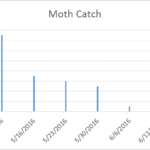
Most growers know that codling moths in the lower Midwest do not behave the same as codling moths in more northern apple growing areas. We usually do not have distinct generations. Here is a graph showing my weekly pheromone trap catches at the Meigs Farm near Lafayette. Notice that the counts have never gone down…Read more about Codling Moth[Read More]
We caught our first spotted wing drosophila adults in traps in Elkhart County over the weekend. We can assume that they will be flying and laying their eggs in developing fruit of grape, raspberry, blackberry, and blueberry from this point until the end of the season. In addition to checking traps, growers should be inspecting…Read more about Spotted Wing Drosophila[Read More]
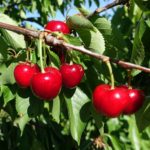
Apples and peaches are developing well and crops are looking good, although a little too heavy in places. Strawberry harvest is underway.
Indiana Hort Society Summer Field Day June 22, 2016 David Doud’s Countyline Orchard 7877 W 400 N, Wabash, IN 46992. Indiana Winery and Vineyard Association Summer meeting July 19-20, 2016 Brown County Inn. Nashville, IN. More information will follow. IFTA Study Tour – July 19-21, 2016 International fruit Tree Association. New York. Full details and registration…Read more about Upcoming Events[Read More]
It’s time for apple growers to begin looking for European red mites. ERM can be a serious problem, reducing the yield and quality of this year’s crop as well as reducing fruit buds for next year. Most growers know the area of their orchard where they first see ERM problems. Generally, populations will start to…Read more about European Red Mites[Read More]

It will soon be time to put your spotted wing drosophila traps in place. Recent research has shown that the commercially available SWD traps are as good as or better than the homemade traps that we have been recommending. Most significantly, we don’t have to mess with the sugar/yeast mixture anymore. We have had good…Read more about Spotted Wing Drosophila[Read More]
We’ve all heard of apple June drop, but what is it, what are the causes and why should we care? June drop is more correctly called physiological fruit drop and is caused by a shortfall of carbohydrates in the tree. This shortfall is because the trees have limited leaf area for photosynthesis (supply of carbohydrates)…Read more about Apple June drop[Read More]
Purdue University prohibits discrimination against any member of the University community on the basis of race, religion, color, sex, age, national origin or ancestry, genetic information, marital status, parental status, sexual orientation, gender identity and expression, disability, or status as a veteran. This material may be available in alternative formats. 1-888-EXT-INFO Disclaimer: Reference to products in this publication is not intended to be an endorsement to the exclusion of others which may have similar uses. Any person using products listed in this publication assumes full responsibility for their use in accordance with current directions of the manufacturer.