One of the first and most important parts of a good insect and mite management program is the application of an early season oil spray to control European red mites, San Jose scale, and several species of aphids. Scales overwinter on the tree as nymphs and European red mites and aphids overwinter as eggs. Because…Read more about Oil Sprays[Read More]
Apples
A number of growers have experienced increasing problems with woolly apple aphids over the last several seasons. Part of the reason for the increased populations may be related to the changing spectrum of insecticides you are using to control other pests. Our experience has been that many of the aphicides that are available that provide…Read more about Woolly Apple Aphid[Read More]
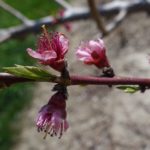
One way insects communicate with individuals of the same species is with pheromones. Pheromones are volatile chemicals released by an insect that usually can be detected only by individuals of the same species. There are a number of different types of pheromones, but the most common type is the sex pheromone. Usually the females will…Read more about Pheromones and Pheromone Traps[Read More]

As the spray season approaches, it is good to remember the profound impact water quality has on the performance of pesticides used by fruit growers. Purdue Pesticides Program recently published a guide, The Impact of Water Quality on Pesticide Performance PPP-86, available at the Education Store, 1-888-EXT-INFO or www.extension.purdue.edu/store/. I highly recommend this guide to…Read more about Effects of Water Quality of Pesticides[Read More]
The results of a historical primate behavior analysis suggest that species with fruit-filled diets evolved larger brains. A popular theory among evolutionary biologists is that we have our sociability to thank for our big brains. This “social brain hypothesis” suggests that the mental effort involved in interacting with others eventually increased our cognitive capacity. However,…Read more about New study: Diet contributes to brain size[Read More]
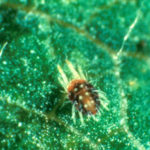
Managing Mites in a BMSB World For several decades, apple growers in Indiana and elsewhere in the Midwest have used a highly effective system to manage European red mites that is based on conservation of the predatory mite, Amblyseius fallacis, along with timely applications of either preventive or rescue miticides. The rationale behind this approach…Read more about Managing Mites in a BMSB World[Read More]
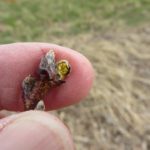
Following a very early warm-up, temperatures cooled off the middle of March slowing crop development and bringing us back closer to normal. In southern areas, peaches are in full bloom, but only just showing a little pink in more northern areas. Apples are still in tight cluster and probably at least 10 days from full…Read more about Crop Conditions[Read More]

We have just finished harvesting Pixie crunch from our plantings at the Purdue Meigs farm and the more I see this apple, the more I like it. Although we think of this as a relatively new apple, the original cross was made 45 years ago at Rutgers University and it was selected from a planting…Read more about Pixy Crunch apple[Read More]

“During the past few years considerable complaint has been made in this state of the loss of apples through rotting.” George P. Clinton, 1902. It’s been quite a season for rot. High temperatures, coupled with regular rains created a perfect storm of summer rots. If you were one of the orchards with problems, you need…Read more about End of season thoughts on rots[Read More]