Mancozeb can still be used in grapes during the 2025 growing season. However, the EPA has proposed to cancel the use of mancozeb in grapes in the future. The Federal Insecticide, Fungicide, and Rodenticide Act (FIFRA) is conducting a re-registration review of many multi-site fungicides, including ziram, thiram, captan and now mancozeb. The proposed cancellation…Read more about Update on Mancozeb Use in Grapes[Read More]
Found 836 Articles

The Southwest Purdue Agricultural Center (SWPAC) is one of the eight Purdue Agricultural Centers located across Indiana. What makes SWPAC unique is its location in the heart of Indiana’s watermelon-growing region—home to one of the state’s most significant specialty crop industries. In addition to watermelon and cantaloupe, southern Indiana is known for its diverse fruit…Read more about Southwest Purdue Agriculture Center Field Day Set for June 26[Read More]

Hi! This week’s crop conditions are looking quite good despite not having any significant rain recently. Most crops have set fruit and are progressing well. The grapes received their second spray this season on the 9th. This is a busy time here at Meigs as we make raised beds for our vegetable crops and prepare…Read more about Crop conditions[Read More]
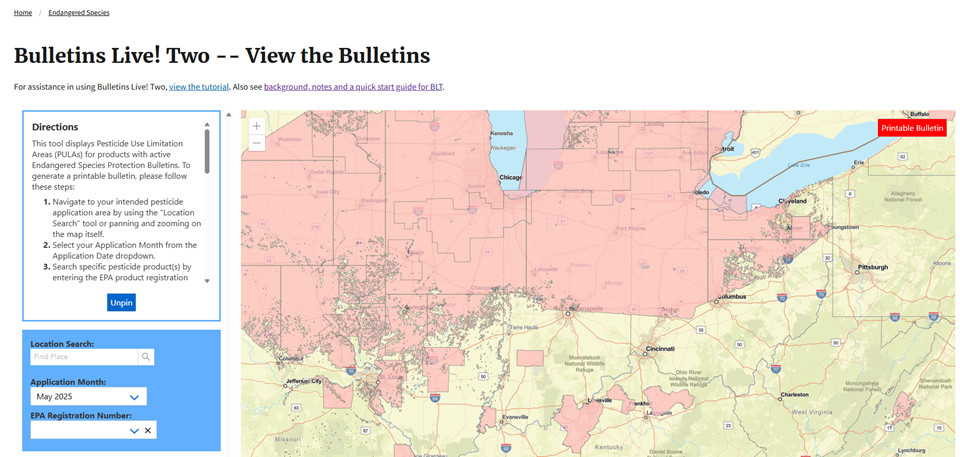
The EPA is enacting new requirements for agricultural pesticide applicators. An increasing number of pesticide labels require applicators to utilize an online system called Bulletins Live! Two to determine if additional pesticide use limitations are required to protect threatened or endangered species or habitat based on 1) application location 2) pesticide product and 3) application…Read more about New EPA Requirement for Pesticide Application[Read More]
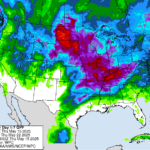
The last few weeks have been on the drier side, particularly for northwestern and west-central Indiana (Figure 1). While temperatures have been seasonal, they are still gradually increasing as we approach summer. Therefore, evapotranspiration rates are starting to increase. This has resulted in the U.S. Drought Monitor classifying much of northern Indiana as Abnormally Dry…Read more about A Bit of Rain Coming Our Way[Read More]

Spring is in full swing in our research high tunnels at Purdue. Overwintering strawberries that we planted in September are now in full bloom and fruits are being harvested. But as temperatures increase and crops become more productive, we also see the emergence of various insect pests. Aphids, amongst other soft-bodied insect pests (e.g., whiteflies,…Read more about Observations on the Companion Plant: Sweet Alyssum[Read More]
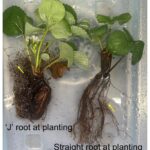
Bare-root strawberry plants often arrive with roots that are 6 to 10 inches long. For optimal planting, the roots should be kept straight, which requires digging a deep hole or using specialized tools. If the planting hole is too shallow, the roots may bend and form what is known as a ‘J-root’. You may have…Read more about ‘J’ Rooting of Bare-root Strawberry Plants[Read More]
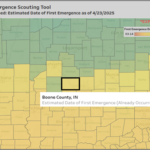
Midwestern farmers have faced a buildup of pesticide resistance in pigweeds (waterhemp and Palmer amaranth), highlighting the importance of scouting to detect weeds early in their growth stages. Otherwise, weed escapes are a common issue as herbicides lose their efficacy when weeds are allowed to grow long enough into their growth cycle. The Midwestern Regional…Read more about Midwestern Regional Climate Center Launches New Experimental Weed Emergence Scouting Tool[Read More]

Hello! This is our third crop conditions update this season. The fruit trees are progressing well as things get up and going around the farm. Most everything has passed 1 or more stages of growth since the third week of this month. Monday the 28th marked our first fungicide application in the vineyard, with the…Read more about Crop conditions[Read More]
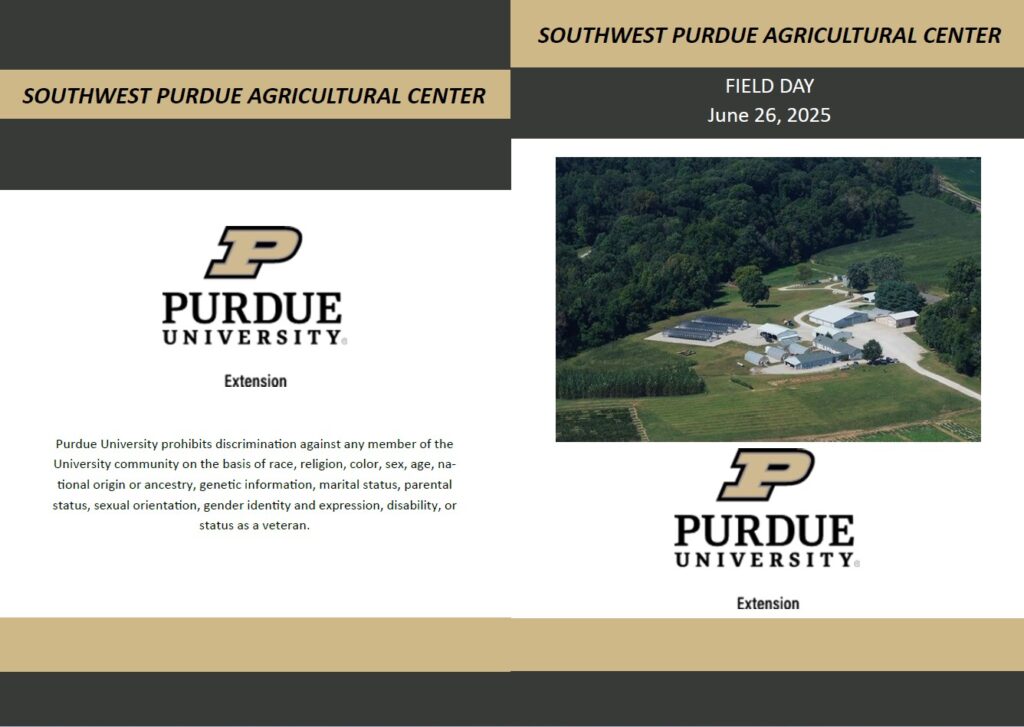
The Southwest Purdue Agricultural Center (SWPAC) is one of the eight Purdue Agricultural Centers located across Indiana. What makes SWPAC unique is its location in the heart of Indiana’s watermelon-growing region—home to one of the state’s most significant specialty crop industries. In addition to watermelon and cantaloupe, southern Indiana is known for its diverse fruit…Read more about Southwest Purdue Agriculture Center Field Day Set for June 26[Read More]
Purdue University prohibits discrimination against any member of the University community on the basis of race, religion, color, sex, age, national origin or ancestry, genetic information, marital status, parental status, sexual orientation, gender identity and expression, disability, or status as a veteran. This material may be available in alternative formats. 1-888-EXT-INFO Disclaimer: Reference to products in this publication is not intended to be an endorsement to the exclusion of others which may have similar uses. Any person using products listed in this publication assumes full responsibility for their use in accordance with current directions of the manufacturer.